
For many athletes, the foundation of their being is discipline, performance and control. Consistency with these values show up in structured training schedules, thoughtfully planned nutrition, and packed routine, all in an effort to stay “on track”. However, for some, there’s a struggle that often goes undetected: binge eating in athletes.
While it may not fit the stereotypical image of an eating disorder, binge eating is more common in athletes than many people realize, and it’s often accompanied by shame, confusion, and silence. If you’ve ever felt out of control around food, stuck in cycles of restriction and overeating, or frustrated by your relationship with food, you’re not alone.
What Is Binge Eating?
Binge eating involves consuming a large amount of food in a short period of time, often accompanied by loss of control, eating past fullness and emotional distress during or after. For athletes, binge eating may look different than expected. It’s not always obvious, and it often exists alongside high performance, structured training, and outward discipline.
Why Binge Eating in Athletes Is Often Overlooked
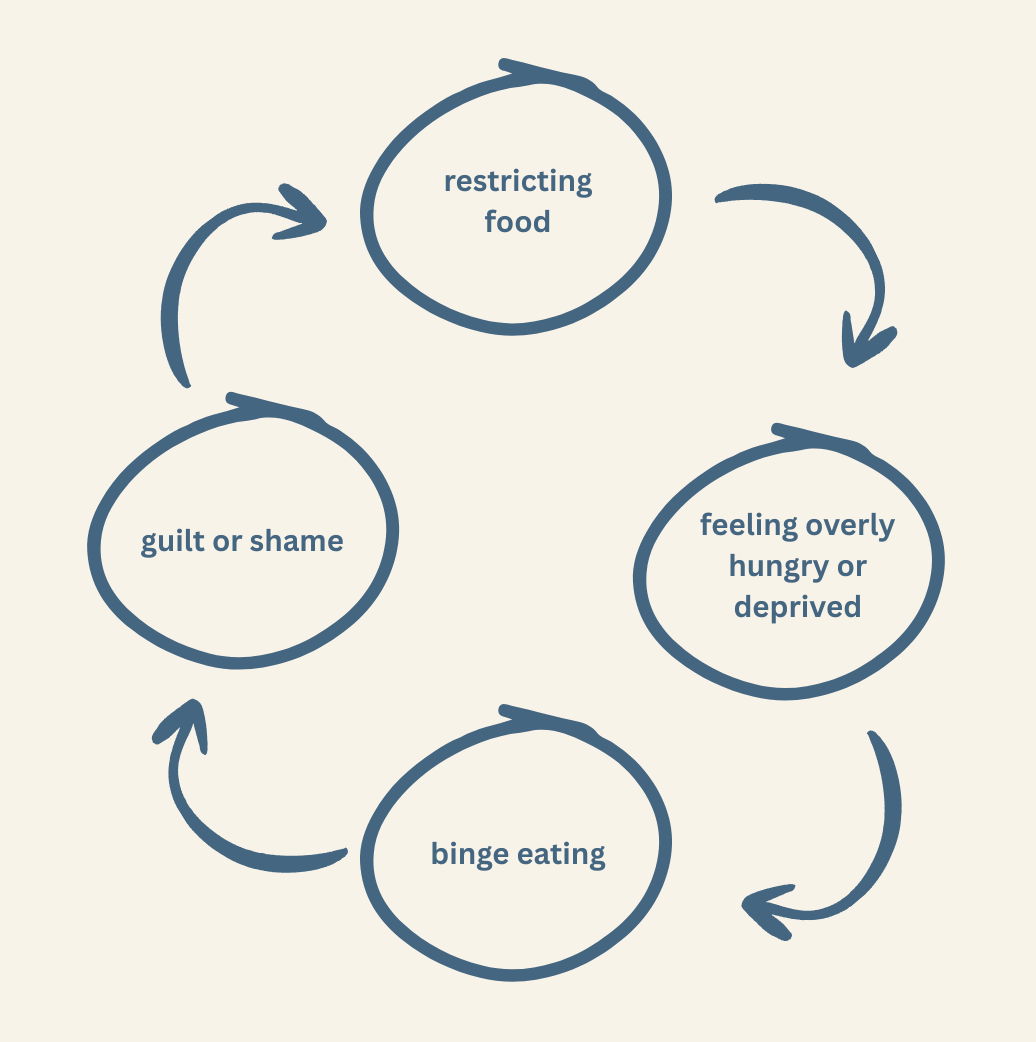
Many athletes don’t recognize binge eating as a problem. One of the primary reasons that binge eating in athletes is overlooked is because it does not fit the “athlete” stereotype. It’s a common belief that athletes are always in control. This misconception can make it hard to acknowledge struggles with food, or admit when it’s time to get help. It also contributes to stigmas about who can struggle with binge eating. Additionally, performance can mask the problem. Amidst binge eating, athletes may still perform well, maintain their physique and meet training expectations. This makes it easier for athletes and their supporters to dismiss the underlying issues. Lastly, binge eating is often paired with restriction. When athletes binge eating, it frequently occurs in a cycle. Athletes may start restricting, resulting in starvation. Depriving food will lead to binge eating, resulting in guilt or shame. These challenging emotions might result in restriction, and the cycle continues. This cycle can feel exhausting and difficult to break.
Common Causes of Binge Eating in Athletes
Understanding why binge eating happens is key to changing it.
Under-Fueling and Energy Deficits
When your body isn’t getting enough energy, it will naturally push you to eat more. Binge eating can be your body’s way of trying to protect you from chronic under-fueling. Part of recovery will include honoring your hunger, and allowing yourself to eat when your body is sending you hunger signals.
Rigid Food Rules
Labeling foods as “good” or “bad” can increase cravings and make certain foods feel more powerful or “forbidden.” This often leads to increased preoccupation with food, stronger urges to binge and feelings of failure when rules are broken.
Emotional Stress and Pressure
Athletes experience immense pressure from competition, coaches and academics. Food can become a coping mechanism when emotional needs aren’t being met.
All-or-Nothing Thinking
Athletes are used to pushing themselves and striving for perfection. This mindset can carry over into eating. Athletes with binge eating might think,
“I already messed up, so I might as well keep going”
“I’ll start over tomorrow”
These mentalities often keep athletes stuck in the binge eating cycle.
Signs of Binge Eating in Athletes
Not all binge eating looks the same, but common signs include:
feeling out of control around food
eating quickly or in secret
cycles of restriction and overeating
intense guilt or shame after eating
constantly thinking about food
using exercise to compensate for eating
If this feels familiar, it doesn’t mean something is wrong with you. It means your body and mind are trying to send you a message and trying to cope.
How Binge Eating Impacts Athletic Performance
Even though binge eating may feel like a personal struggle, it can directly affect performance.
Energy Fluctuations
Cycles of restriction and binge eating can disrupt energy levels, leading to fatigue and inconsistency.
Poor Recovery
Inconsistent fueling can impact muscle repair, hydration, and overall recovery.
Mental Distraction
Constant thoughts about food can take away from focus, confidence, and presence in your sport.
Increased Stress
The emotional toll of binge eating, including guilt, shame, frustration, can compound performance pressure.
The Truth: Binge Eating Is Not a Lack of Discipline
One of the biggest misconceptions is that binge eating is about willpower. In reality, it’s often the opposite. Binge eating is commonly driven by:
biological needs (your body needing more fuel)
psychological restriction (feeling deprived)
emotional coping
Your body is not working against you, it’s trying to protect you.
How to Break the Cycle of Binge Eating
Recovery doesn’t mean giving up structure or performance. It helps build a healthier, more sustainable approach.
1. Prioritize Consistent Fueling
Eating regularly throughout the day helps stabilize hunger cues and reduce urges to binge. Eating on a regular schedule will help your body relearn it’s natural signals. It’s important not to skip meals, even when you aren’t hungry, to meet your fuel needs and establish hunger cues.
2. Reduce Food Rules
Moving away from “good vs bad” thinking can decrease the intensity of cravings and guilt. There is value in all foods.
3. Address Underlying Stress
Finding alternative ways to cope with pressure, like therapy, journaling, or support, can reduce reliance on food.
4. Build Awareness Without Judgment
Instead of criticizing yourself, try to understand what’s driving your eating patterns. Learning to view yourself non-judgmentally will improve your relationship with food and your performance.
5. Seek Professional Support
Working with a therapist who understands athletes can help you:
break the restrict–binge cycle
rebuild trust with your body
improve both mental health and performance
You’re Not Alone in This
Binge eating in athletes is more common than people talk about, but that doesn’t mean you have to deal with it alone.
You deserve to have a strong relationship with food. You can feel in control without restriction. You are capable of performing at a high level without burnout. Recovery is not about perfection. It’s about sustainability, flexibility, and support.
Ready for Support?
If you’re an athlete struggling with binge eating or your relationship with food, reaching out can be a powerful first step. Working with a therapist who understands athletes and eating disorders can help you create a healthier approach to both food and performance.
You deserve to feel fueled, focused, and free, not stuck in cycles with food.